
Deed Not Breed
The Criminalization of Phenotype
The XL Bully ban was not based on DNA or behaviour, but on a tape measure. Two years later, data reveals a massive financial cost (£25M) and an ethical crisis that has shattered public trust.
Criminalization by Physical Appearance
In late 2023, the government added the "XL Bully" type to the Dangerous Dogs Act blacklist. It was the first breed ban in 30 years, but with an unprecedented legal twist: the "criminalization of phenotype".
The ban requires no DNA proof or history of aggression. If a dog meets physical measurements (height and proportions), it is legally a "prohibited weapon" unless its owner proves otherwise in court.
The immediate effect turned thousands of families into holders of "live contraband," forcing a choice between a costly exemption process or surrendering their pet for state execution.
Selling, breeding, gifting, and abandonment banned; muzzle and lead required in public.
Possession without a Certificate of Exemption became a criminal offence.
Neutering deadline for dogs older than 1 year (as of Jan 31, 2024).
Deadline for dogs aged 7-12 months (as of Jan 31, 2024).
Final deadline for dogs younger than 7 months (as of Jan 31, 2024).
Dec 31
Phase 1 Start
Commercial ban and handling requirements.
Feb 1
Phase 2 Start
Criminalization of unlicensed ownership.
Jun 2025
Final Phase
Closing of neutering deadlines for puppies.
For the justice system, a dog that has never bitten is identical to a dangerous one if it stands over 51cm (males) or 48cm (females).
Trial by Tape Measure
"The official standard defines the animal by body measurements: height at withers, head shape, and musculature. A crossbreed can be condemned solely on dimensions."
The problem of visual identification: police officers without specific cynological training must decide on an animal's life based on a subjective assessment of "type".
Government Methodological Limits
- No DNA test exists to determine "legal type".
- Assessment is subjective and visual (conformation).
- Behavioural evaluations are ignored: a friendly dog is just as illegal.
- The standard is so broad it catches crosses of other large breeds.
56,346
Registered Dogs
Official exemption figure (Jun 2025). Government initially estimated only 10,000.
>100k
Real Population
Estimated that at least half the real population remains unregistered due to fear or cost.
This has led to seizures of dogs that are not genetically American Bully XL, but "look like" one. Phenotype (appearance) prevails over genotype (biological reality).
Under Section 1 of the DDA, the burden of proof is reversed: the owner must prove the dog's innocence, often through costly expert assessments, while the animal remains in high-security police kennels.
Veterinary science is clear: physical appearance does not predict behaviour.

The Price of Survival
For families, the law offered no safety, but a cruel financial and emotional obstacle course. The State imposed an exemption fee, mandatory third-party liability insurance for life, microchipping, and, most painfully, the forced surgical neutering of healthy animals. All under the constant threat of seizure.
For those unable to afford these mounting costs, or living in social housing where their pets were banned, the only exit offered was a macabre "compensation": the government paid £200 to owners in exchange for taking their own dog to the vet to be executed.

£200
The price of a life
Compensation offered by the government to owners who voluntarily sacrificed their dogs.
Crisis Home or Law?
The ban didn't just kill dogs; it shattered families and entire communities.
Housing
Social and private landlords have banned keeping exempt dogs, causing evictions.
Abuse Victims
The "Freedom Project" (Dogs Trust) cannot legally foster XL Bullies, trapping victims who refuse to flee if it means their pet is executed.
Mental Health
Vets and owners report severe trauma ("moral injury") from the forced execution of healthy animals.
Substitution
The market has already moved to unregulated high-power breeds (e.g. Cane Corso), proving the futility of breed-specific bans.
Social Conflict
Rise in work absence, mental health crisis, and reports of abuse/threats from the public (both pro-dog and anti-dog activists).
Death Sentence
Shelters collapsed. The law bans rehoming, sentencing every abandoned dog to death.
Crisis Kill or Cure?
The veterinary profession was founded to save lives. The law forced them to end them.
Data: Vet Times Surveys and ADCH Impact Report 2024.
Crisis Safety or Waste?
The impact on public infrastructure was devastating.
Police Deficit
NPCC projected a £25M deficit for 2025. Central government provided NO additional funds, forcing cuts elsewhere.
Kennel Blockage
The obligation to house "evidence" dogs saturated contracted private kennels, driving up prices and reducing space for common strays.
Professional Trauma
Vets left the profession under pressure to kill healthy animals. "Moral injury" is now a recognized occupational risk in the sector.
Police Overtime (£560k)
Extraordinary police spending in just the first few months. Resources diverted from fighting real crime.
£25M
Total Police Spend
Annual projection to enforce ban (NPCC, April 2025). Up 500% from 2018.
£1,000
Monthly Kennel Cost
Per seized dog while awaiting trial (12-18 months).
£12,000
Annual Cost per Dog
Estimated cost for prolonged police custody.
£560k
Police Overtime
Just between Feb-Sep 2024 for ban management.
£78,900
Compensation (Total)
Total paid by State to owners for voluntary euthanasia (406 cases).
£5.2M
Exemption Revenue
Estimated (£92.40 x 56k registered dogs).
Destination of £25M (Police Budget)
The disparity is obscene: the State spends millions chasing dogs, but offered crumbs to help owners comply or euthanise humanely.
The Bureaucratic Cleanse
Beyond safety rhetoric, data reveals a logistical operation of mass elimination. Kennels filled, costs soared, and thousands of dogs were destroyed.
Phases of Operational Impact
The ban overwhelmed system capacity from month one.
Phase 1
Initial Shock (Feb-Sep 2024)
Police seized 4,586 dogs in just 8 months. The kennel system collapsed immediately.
Phase 2
The Judicial "Black Hole"
Courts could not cope. Dogs are trapped 12-18 months in cages awaiting trial, costing £1,000/month each.
Phase 3
Silent Execution
With adoption banned, any stray or abandoned XL Bully is condemned to automatic death. No second chances.
Phase 4
Resource Diversion
Police warned that managing dogs diverts officers from serious crimes like domestic violence or organized crime.
Figures of the "Cleanse"
Between February and September 2024 alone, police seized 4,586 dogs and executed 848 in custody. The destruction pace exceeded 100 dogs a month.
Institutional Euthanasia
Defra also validated 406 euthanasia payments (FOI 2024/15523), totaling £78,900, and acknowledged that it does not publish one UK-wide euthanasia total caused by this law.
Police Cost Burden
NPCC reported costs rising from £4M (2018) to >£11M (2024), with projections up to £25M by April 2025, plus ~£560k in overtime (Feb-Sep 2024).
Elimination Breakdown
There is no single number, but a sum of verifiable tragedies across sectors.
Total Eliminated
>3,000*
Since Ban
Conservative estimate (Police + Gov + Shelters).
Police (NPCC)
848
Executed
Est. cost £340k (Feb-Sep 2024 only).
Government
406
Voluntary Cull
Owners compensated with £200.
Shelters (ADCH)
693
Legal Euthanasia
766% increase vs 2022 (only 80).
RSPCA
674
Seized/Euthanized
53-65% of their intake are XL Bullies.
Comparative Data
Public safety context: Human Crime and XL Bully incidents versus other breeds.
Fatalities: Trend (2021-2024)
Data based on media reports (no official registry).
Human Crime vs Dogs (2025)
Disproportionate measures against a canine group versus the real risk of human violence.
Priorities: Theft vs Deaths
Contrasting the volume of unattended human crimes.
"When law judges appearance instead of behaviour, it punishes symbols rather than resolving risk."
The policy prioritized a visible, fast response, but not the root causes: prevention, responsible breeding, control, and owner accountability.
Verified Sources: NPCC (£25m, seizures), Defra (56k certs, compensation), ONS (Comparative crime), RSPCA/ADCH (Shelters, euthanasia), High Court (Coulthard Case), GTI (Security context).
Our Manifesto
This website was born as a response to one of the darkest decisions in modern politics...
The definition of genocide is "the systematic elimination of a human group based on race, ethnicity, religion, or nationality." If we replace "human group" with "canine group," the reality is chilling. Thousands of living beings were sentenced to death based exclusively on their physical appearance (phenotype), regardless of their individual behavior.
But what makes this measure a true moral atrocity is not just the cruelty — it is the profound ignorance about nature. A dog has no "evil." It has no moral agency. An animal, even when it attacks, acts out of instinct, fear, defense, or poor upbringing. It does not choose to be cruel. It does not plan to cause harm.
Humans do.
And this is where the system demonstrated its most absolute perversion. The British government placed families before an impossible choice under the threat of committing a criminal offense. Overnight, owning your pet made you a criminal unless you went through a bureaucratic and costly process. And for those who couldn't afford it or feared jail, the State offered a macabre way out: £200.
The government created a "Renewal Plan" for lives. It offered £200 (~€235) of public money to every owner who brought their healthy dog to the vet to be euthanized. They subsidized death to clean the streets of "instinct," while true human evil — the conscious kind — continued to grow unchecked.
It is nauseating to think that while the police allocated £25 million to measuring the height of family dogs to confiscate them, the figures for real human violence were breaking historic records:
• Sexual Violence: Recorded rapes reached 74,265 (ONS, year ended Sep 2025). In London, a rape is reported every 54–60 minutes. • Street Violence: Knife crime incidents exceeded 50,000 annually.
It is infinitely easier to legislate the execution of an animal that acts by nature, than to fix a broken society where humans consciously choose to rape, stab, and destroy their fellow humans. They killed the one who doesn't know how to hate to feign safety, while proving incapable of containing the only animal that hates by choice.
Priorities define a country's values. And when a State prefers to finance the execution of pets rather than guarantee the real safety of its citizens from human violence, it has lost its moral compass.
Is it ethical for an animal to pay with its life for the incompetence of our own species?
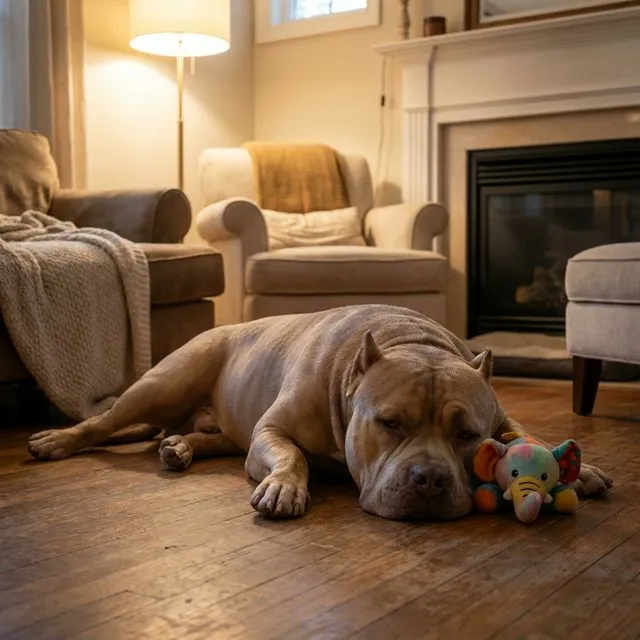
Meet Nano
A video is worth a thousand words. This is the reality of families who love their dogs.
The Question
Your Impact
Every voice counts in demanding justice. By joining, you show the world is watching.
Your voice has been counted.
Is it ethical for an animal to pay with its life for the incompetence of our own species?
If public safety is the goal, policy must measure behaviour, context, and owner responsibility, not only body shape.
Share this message
#DeedNotBreed
Use the hashtag to join the movement.